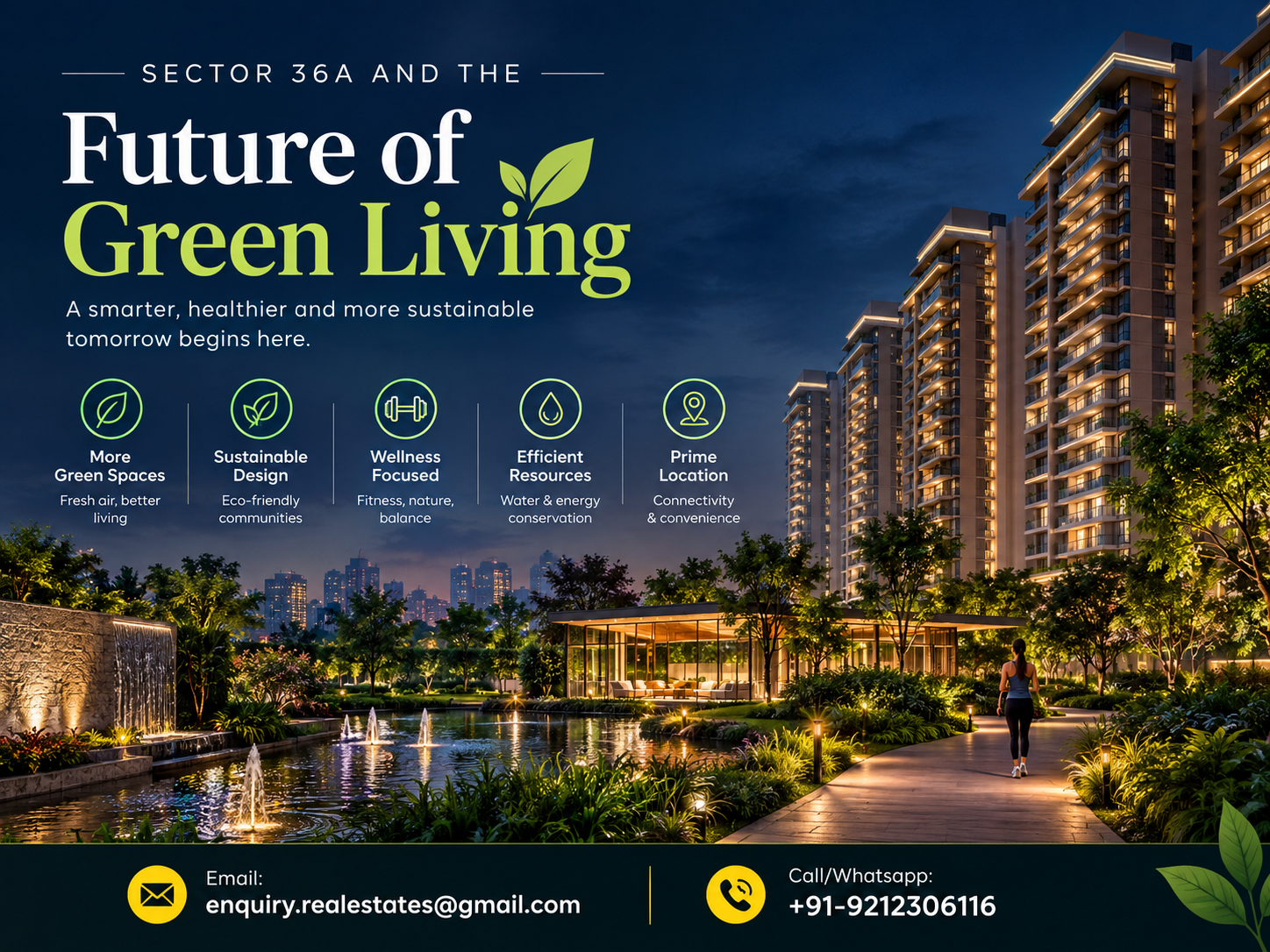
The Green Transformation of Sector 36A
The concept of "home" is undergoing a radical metamorphosis. We are moving away from the era of sterile, energy-guzzling high-rises and entering an age where residential spaces must function as living, breathing ecosystems. In the heart of Northern India’s most dynamic economic hub, Sector 36A in Gurgaon has emerged as the ground zero for this transformation. As climate change shifts from a theoretical threat to a daily reality, the demand for housing that respects the environment while enhancing human health has reached an all-time high.
Sector 36A is not merely a residential district; it is a blueprint for the future of urbanism. By integrating cutting-edge technology with ancient biophilic principles, this sector is redefining what it means to live well. At the forefront of this movement is Max Estate 361, a development that serves as a lighthouse for sustainable luxury.
This article provides an exhaustive, expert-level analysis of how Sector 36A is pioneering green living. We will explore the architectural innovations, the strategic infrastructure, the psychological benefits of eco-conscious design, and the long-term investment viability of properties like Max Estate 361 Gurgaon. Whether you are a first-time homebuyer, a seasoned investor, or an urban planner, understanding the evolution of Sector 36A is essential to navigating the future of the Indian real estate market.
The Pillars of Sustainable Urbanism in Sector 36A
The Strategic Significance of Location and Connectivity
Sustainability begins with location. A truly green lifestyle is impossible if a resident must spend hours in carbon-intensive traffic every day. Sector 36A’s primary advantage lies in its proximity to the Dwarka Expressway and the Central Peripheral Road (CPR). This connectivity is the backbone of the "15-minute city" concept, where work, leisure, and essential services are all within a short radius.
The development of Max Estate 361 Sector 36A benefits immensely from the upcoming Global City project—a 1,000-acre mixed-use development designed to be the central business district of the future. By placing residential hubs near these economic engines, Sector 36A reduces the total vehicle miles traveled by its residents, directly contributing to a lower regional carbon footprint.
Biophilic Design: Beyond Aesthetics to Wellness
For many years, luxury in Gurgaon was equated with imported marble and gold-plated fixtures. However, Max Estate 361 Sector 36A Gurgaon is shifting the narrative toward biophilic design. This architectural approach seeks to connect building occupants more closely to nature.
In Sector 36A, this is manifested through:
- Vertical Forests and Sky Gardens: Integrating greenery into the vertical plane of the building to improve air quality and provide natural insulation.
- Daylighting Optimization: Designing layouts that maximize natural light, reducing the need for artificial lighting and improving the circadian rhythms of residents.
- Natural Materiality: Using stone, wood, and clay that have lower embodied carbon and create a tactile connection to the earth.
Residents of Max Estate 3 BHK Apartments experience these benefits daily. The integration of nature into the living space has been scientifically proven to reduce cortisol levels, lower blood pressure, and enhance cognitive function.
Energy Autonomy and Thermal Engineering
One of the most significant challenges in Gurgaon’s climate is the extreme heat. Traditional buildings rely on massive HVAC systems that strain the power grid and emit heat back into the environment. Sustainable developments in Sector 36A are breaking this cycle through advanced thermal engineering.
Max Estate 361 utilizes high-performance building envelopes. This involves:
- Low-E Glass: Specialized window coatings that reflect infrared light (heat) while letting in visible light.
- Thermal Massing: Using materials that absorb heat during the day and release it slowly at night, stabilizing indoor temperatures.
- Reflective Roofing: Reducing the "urban heat island effect" by reflecting sunlight away from the building.
By reducing the cooling load, Max Estate 361 Gurgaon ensures that residents enjoy a comfortable indoor environment with significantly lower electricity bills.
Water Stewardship in a Semi-Arid Region
Gurgaon’s water table has been a cause for concern for decades. Sector 36A is tackling this through a "circular water economy." Developments like Max Estate 361 Sector 36A are designed to be water-neutral.
- Zero Liquid Discharge (ZLD): On-site sewage treatment plants ensure that every drop of wastewater is treated and reused for landscaping and flushing.
- Atmospheric Water Generators: Innovative technology that extracts moisture from the air to provide clean drinking water.
- Rainwater Harvesting: Massive subterranean tanks capture monsoon runoff, recharging the local aquifer rather than letting it go to waste.
The Evolution of the 3 BHK into a Wellness Sanctuary
The layout of a home influences the mental state of its inhabitants. The Max Estate 3 BHK Apartments are designed with the "LiveWell" philosophy, which treats the apartment as a sanctuary for health.
Key features include:
- Air Filtration Systems: Medical-grade HEPA filters that remove PM2.5 and PM10 pollutants, ensuring that the indoor air is significantly cleaner than the air outside.
- Acoustic Insulation: Advanced wall and window treatments that block out the noise of the expressway, creating a tranquil environment for deep sleep and focus.
- Flexible Spaces: Rooms that can easily transition from home offices to yoga studios, supporting the modern, hybrid lifestyle.
Technological Integration: The Role of IoT and AI
Green living in Max Estate 361 Sector 36A Gurgaon is augmented by technology. Smart home systems allow for precise control over resource consumption.
- Predictive Maintenance: AI-driven sensors monitor plumbing and electrical systems to detect leaks or inefficiencies before they become major problems.
- Smart Grids: The ability to shift energy usage to off-peak hours, saving money and reducing strain on the national grid.
- Automated Waste Management: Systems that sort and process organic waste into compost on-site, which is then used to nourish the community gardens.
The Investment Case for Green Real Estate
From a financial perspective, investing in Max Estate 361 is a hedge against the future. As environmental regulations become stricter, "brown" buildings (those with high carbon footprints) will face higher taxes and lower demand.
Capital Appreciation
Properties in Sector 36A have seen a steady rise in value due to the Dwarka Expressway completion. However, green-certified buildings like Max Estate 361 Gurgaon are appreciating at a faster rate. Investors are recognizing that sustainable features reduce operational costs and increase the long-term viability of the asset.
Rental Yields
There is a growing demographic of corporate expatriates and high-net-worth individuals (HNIs) who specifically look for "Green Homes." These tenants are willing to pay a premium for improved air quality and wellness amenities, ensuring that Max Estate 361 Sector 36A offers superior rental yields.
Psychological and Social Sustainability
Sustainability is often discussed in terms of carbon and water, but social sustainability is equally vital. Sector 36A promotes community cohesion through shared spaces.
- Community Farming: Allotments where residents can grow their own vegetables, fostering a sense of connection to the food cycle and their neighbors.
- Pedestrian-First Design: Wide, shaded walkways that encourage walking and cycling over driving, leading to more spontaneous social interactions.
- Intergenerational Spaces: Areas designed for both children and the elderly, ensuring that the community is inclusive and vibrant.
The design of Max Estate 361 Sector 36A Gurgaon encourages residents to step out of their private units and engage with their environment, which is essential for mental health in an increasingly digital world.
Statistics and Market Research: The Green Shift in Numbers
The data supporting the shift toward sustainable living is overwhelming:
- Energy Savings: According to IGBC, green homes in India can save between 20% to 30% in energy costs annually.
- Water Savings: Implementation of low-flow fixtures and recycling systems leads to a 30% to 50% reduction in fresh water demand.
- Health Benefits: Occupants of green buildings report a 15% increase in productivity and a significant reduction in respiratory ailments.
- Market Demand: A 2023 survey by Knight Frank revealed that 65% of Indian homebuyers prioritize "energy efficiency" and "wellness features" when selecting a new property.
In this context, the Max Estate 3 BHK Apartments are perfectly positioned to capture the largest segment of the luxury market.
Construction Material Innovation
The "Future of Green Living" in Sector 36A is also about what goes into the walls. The construction of Max Estate 361 involves:
- Fly Ash Bricks: Utilizing waste from power plants to create durable building blocks.
- Recycled Steel: Reducing the environmental impact of mining and smelting new iron ore.
- Carbon-Sequestering Concrete: New technologies that actually trap CO2 within the concrete as it cures.
Future Outlook: 2030 and Beyond
As we look toward the next decade, Sector 36A will likely become a case study for "Regenerative Urbanism." This goes beyond just "doing less harm" to actually "doing good."
- Net-Positive Energy: Buildings that generate more energy via solar and wind than they consume, feeding the excess back into the city grid.
- Autonomous Transit: The sector is designed to accommodate future autonomous electric shuttles, further reducing the need for private car ownership.
- Micro-Climatic Control: Using large-scale misting systems and specific tree canopy designs to lower the outdoor temperature of the sector by 3-5 degrees Celsius.
The success of Max Estate 361 Gurgaon will pave the way for a new generation of developments that see the environment not as a constraint, but as a partner.
Challenges and Solutions in Green Development
While the vision is grand, building sustainably in a developing market like India presents challenges.
- Initial Cost: Green buildings can have a 5-8% higher upfront construction cost. However, the "payback period" through energy savings is usually less than 5 years.
- Supply Chain: Sourcing certified sustainable materials can be difficult. Developers like Max Estates are solving this by building long-term partnerships with eco-friendly suppliers.
- Awareness: Many buyers still prioritize square footage over air quality. Comprehensive education and transparent data on health benefits are key to shifting this mindset.
The Role of Governance and Certification
The future of Sector 36A is supported by a robust regulatory framework. The integration of RERA ensure transparency, while IGBC (Indian Green Building Council) and LEED certifications provide a gold standard for sustainability. Max Estate 361 Sector 36A aims for the highest tiers of these certifications, providing third-party verification of its green claims.
Living the LiveWell Philosophy
Ultimately, the goal of Max Estate 361 Sector 36A Gurgaon is to create a space where life can flourish. It is about waking up in a room filled with natural light, breathing air that is free of toxins, and living in a community that values the planet.
For a family moving into the Max Estate 3 BHK Apartments, this means:
- Children playing in parks free from vehicular traffic.
- Working from a home office that is quiet and thermally comfortable.
- Knowing that their lifestyle is not contributing to the degradation of the environment.
Sector 36A as a Global Benchmark
When we compare Sector 36A to other global green hubs—such as Vancouver’s Olympic Village or Singapore’s Punggol District—it holds its own. The combination of high-density luxury, extreme climate adaptation, and rapid economic growth makes it unique. The lessons learned here will be exported to other cities across the Global South.
Key Insights Section
- Connectivity and Sustainability: Green living starts with efficient transit; Sector 36A’s proximity to Dwarka Expressway is a major eco-advantage.
- Holistic Wellness: The "LiveWell" philosophy integrates physical health (air, water) with mental health (biophilia, light).
- Financial Wisdom: Green buildings offer better long-term ROI, higher rental yields, and protection against future environmental taxes.
- Technological Empowerment: Smart home systems and AI are essential tools for resource conservation and predictive maintenance.
- Community Resilience: Sustainable urbanism fosters social bonds through shared green spaces and pedestrian-friendly planning.
Frequently Asked Questions
What defines a residential area as a green living hub?
A green living hub is defined by its ability to minimize environmental impact while maximizing inhabitant wellness. This includes energy-efficient building designs, extensive green cover, waste recycling systems, and strategic location to reduce travel-related carbon emissions.
How does living near a major expressway contribute to sustainability?
Strategic connectivity reduces the time and fuel spent in traffic. When a residential area is located at a transit crossroads, it allows for more efficient public transport options and reduces the overall vehicular emissions of the region.
What are the health benefits of choosing an eco-conscious home?
Eco-conscious homes prioritize indoor air quality, natural light, and non-toxic building materials. This leads to a reduction in respiratory issues, better sleep quality, lower stress levels, and improved mental clarity due to biophilic design.
Why is water management so critical in the Gurgaon real estate market?
Gurgaon faces significant water stress. Developments that implement zero liquid discharge, rainwater harvesting, and graywater recycling ensure that the community remains resilient against future water shortages and reduces its burden on municipal resources.
How can smart home technology assist in environmental conservation?
Smart technology allows residents to monitor and control their energy and water usage in real-time. Automated systems can turn off lights in empty rooms, adjust cooling based on occupancy, and detect leaks, leading to significant resource savings.
What is the difference between a standard luxury apartment and a wellness-focused one?
Standard luxury focuses on expensive finishes and exclusive amenities. Wellness-focused luxury prioritizes the "unseen" quality of life, such as the purity of the air, the quality of light, acoustic comfort, and the psychological impact of the surrounding environment.
Is there a significant difference in maintenance costs for sustainable buildings?
While the technology to manage green systems requires specialized care, the overall operational costs are lower. Savings on water and electricity bills often offset the specialized maintenance fees, making the property more affordable to run in the long term.
How does the presence of green spaces impact the local micro-climate?
Large-scale greenery and vertical gardens help combat the urban heat island effect. Through transpiration, plants cool the surrounding air, making the immediate outdoor environment several degrees cooler than a standard concrete-heavy district.
What role does air filtration play in modern urban apartments?
In cities with high pollution levels, medical-grade air filtration becomes a necessity rather than a luxury. These systems filter out fine particulate matter (PM2.5) and volatile organic compounds, creating a safe haven for residents.
Why are institutional investors shifting toward green-certified properties?
Institutional investors look for long-term stability. Green-certified properties are more resilient to climate change, comply with future environmental laws, and attract high-quality tenants, making them lower-risk assets.
What is the concept of a 15-minute city in an urban context?
A 15-minute city is an urban planning concept where all basic human needs—grocery stores, parks, workplaces, and healthcare—can be reached within a 15-minute walk or bike ride from one’s home.
How does biophilic architecture improve mental health?
Human beings have an innate connection to nature. By incorporating natural light, plants, and organic shapes into architecture, buildings can reduce the fight-or-flight response, leading to a more relaxed and productive state of mind.
What should a homebuyer look for in a sustainable property's certification?
Look for certifications from reputable bodies like the IGBC (Indian Green Building Council) or LEED (Leadership in Energy and Environmental Design). These ratings (Silver, Gold, Platinum) indicate the level of commitment to sustainable practices.
How do energy-efficient windows affect the indoor environment?
Advanced windows with low-emissivity coatings block heat while allowing light. This keeps the home cooler in the summer and warmer in the winter, reducing the need for mechanical heating and cooling.
Are green buildings more durable than traditional ones?
Yes, many sustainable materials like fly-ash bricks and recycled steel are engineered for high durability. Additionally, the focus on moisture control and thermal stability prevents common issues like mold and structural expansion/contraction.
Final Thoughts
Sector 36A is not just a destination for luxury seekers; it is a laboratory for the future of human habitation. The integration of ecological responsibility with high-end living in projects like Max Estate 361 represents the pinnacle of modern real estate development. As we move forward, the success of this sector will be measured not just by the height of its towers, but by the health of its residents and the sustainability of its footprint.
Investing in Max Estate 361 Gurgaon or a Max Estate 361 Sector 36A property is a commitment to a better way of life. It is a recognition that true luxury is found in harmony with nature, and that the future of the city depends on our ability to build consciously today. Whether through the expansive Max Estate 3 BHK Apartments or the world-class infrastructure of Max Estate 361 Sector 36A Gurgaon, the message is clear: The future is green, and it is here.