Delhi/NCR
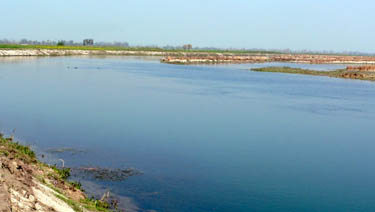
Delhi had planned for a riverfront for Yamuna as early as 1913 to give the new capital an aesthetic promenade from Wazirabad in the north to Indrapat (Purana Qila and its surroundings) in the south. Hundred years on, the central government continues to idealize urban riverfronts like that of the Sabarmati and has been floating proposals to make Yamuna an urban infrastructure component such as dredging it to make it navigable.
Awadhendra Sharan, associate professor at Centre for the Study of Developing Societies, whose research paper on Yamuna was published in Elsevier's journal of City, Culture and Society, traces how various authorities at different times in history tried to develop the river and the riverfront.
Around 1956, the Town Planning Organization suggested development of a riverfront for recreational activities with playgrounds, swimming pools, and fishing and bathing areas. "It drew attention to the possibility of taming the river by building a dam," writes Sharan.
Cultivation of melons on the banks in summer and fishing were common in Okhla. Floods were an annual phenomenon but there was ample land for free flow of river during the monsoon months. A new phase of urbanizing the river began after Independence in 1955-56 leading to floods becoming a health issue with waste water discharge points near the river affecting quality of drinking water. In 1990, DDA too planned several urban projects to integrate the city and river.
Over the past two decades, Yamuna became extremely polluted and ceased to be a perennial river. This is when the government started blaming squatters in illegal colonies along Yamuna for the pollution and began pushing "technological solutions". One of the major changes in approach is marked by the high court nod to the Commonwealth Games Village. Sharan recollects in his paper how there were discrepancies in various technical reports submitted to the court on the impact of Games Village which led to the court deciding that the area for it was not on the floodplains.
Another high court decision in March 2003 led to removal of the Yamuna Pushta slum cluster. But various studies and experts say this will not help address pollution. According to one such study, around 3,600 million litres of wastewater generated in the city goes to Yamuna; of this less than 1% is contributed by the slum dwellers.
Sharan suggests the "precautionary principle" should have been applied before such irreversible changes-like building Akshardham and the Games Village-were made. "I have tried to argue from all the historical evidence that's available that we should leave the river as it is and not convert it into a real estate operation. That makes more economic and ecological sense," Sharan says.
Source:http://content.magicbricks.com/industry-news/delhi-ncr-real-estate-news/riverfront-planners-caught-in-time-warp/80380.html